

NaNoWriMo is Dead
So what now?

It’s 2013, and I’m attending an event at an obscure, used bookstore. There are roughly twenty people in the building, and I’m lost in a crowd of creatives. The municipal liaison, Ben, gives us a speech about what to expect, and I sit there in the front row, feeling like a contender in The Hunger Games.
When we break for snacks and mingling, I run into nineteen interesting stories, and nineteen people with an incredible journey to send me on with their words. I grow excited at all the minds that will work hard all month, and the countdown until the first day to prove myself gives me an intense rush.
Thirty days pass, and I sit at the desk each week working furiously away on my first novel-length project, and lean back. On one wall of the bookstore, there is a chalkboard-painted wall where people write their names along with their current word count. At this point, I’ve gotten used to writing an entire novel in Notepad. I’m not joking. Notepad.
Finally, I come back after finishing the novel at my house and attend the celebration ceremony. At this ceremony, there are three winners. Myself, the ML, Ben, and a friend I enjoyed competing with named Jon.
I look around the room, and other is little to nobody else there. It’s just us standing there congratulating ourselves, and a sensation rushes over me. Not one of pride, but of sadness.
The rise of a competitive me.
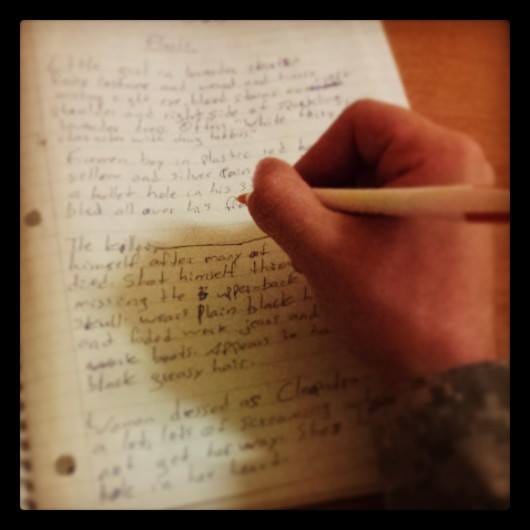
I was sad because all those people and all those stories stopped. Most of them gave up in week two, which I learned is statistically the point where most people stop writing.
This event taught me what I’m capable of, and it is here that I learned how small the population is of people who actually take part all the way to completion. It rejuvenated something in me, and it showed me not only how telling the reality is for writers, but also for what I was able to do myself. I plan all my books on notepads before writing them, and in the days leading up to the first day of the competition, my project was all I could think about. I was a horse waiting at the gate for the Kentucky Derby, and I felt a hard rush of competition in me when others started to get higher word counts than myself. When I saw others who fell behind, I didn’t feel sorry for them. In my young mind, I thought: “Why are you succumbing to your excuses? I’m in the damn infantry and I still achieve it.”
That wasn’t entirely correct of me to feel that way for other writers, but I didn’t understand why NaNoWriMo was so important to me, and so little to other people. Who doesn’t want to compete and see what they can accomplish when there’s all these other people involved to help and encourage you?
It taught me to focus.

Taking part in NaNoWriMo taught me to focus on one specific writing task, like I hadn’t done before. Sure, there were always large projects I wanted to do, but it was difficult to take myself seriously. I especially did (and still do) suffer from impostor syndrome. I’m always thinking to myself, “What am I doing here? Why am I worthy of praise or success?”
The real answer to this is to do it for yourself. Ultimately, you’re your own boss when it comes to your novels, and that’s what I learned from this community. What I miss most about it, however, is the desire to socialize with other people who are struggling through the same thing. They all have a dream to create a novel for others to enjoy, so why am I the exception? The answer, I think, lies therein my desire to prove to myself that I can do things. I have to work hard and leave something behind. It’s my immortality project, and all the binge-watching TV at home won’t give that to me.
What really drives my focus is success. When I feel like I can win something, my deeply competitive nature comes out of me. I was suddenly surrounded by other people I wanted to write not only fast than, but better than. I wanted to make my writing revolutionary projects, and I wanted people to see what this kid from nowhere was capable of. I’m from a village in Maine, where the population doesn’t even scrape above four hundred people year-round. Suddenly, here I was competing on a large scale, even where everyone wants to get their novel out there, and I wanted my name to be on a list of successes. It gave me a goal and a sense of pride when I did well. All that effort wasn’t wasted because it meant I could publish a book a year later, and share it with all my friends and family.
That feeling continued each year as I worked hard on every project until publishing each successful project a year later. This community not only give me focus; it gave me a place where there were like-minded people who wanted to accomplish things with me. It gave me energy each November, and that was the greatest spur.
Then, the spurs started to rust.
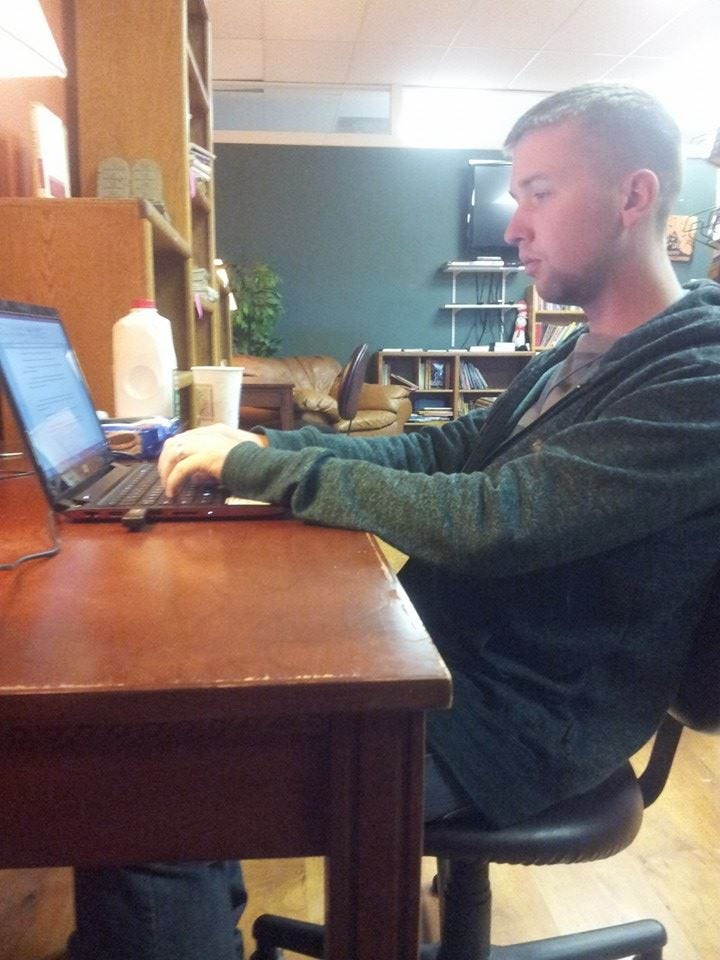
As the years went on, NaNoWriMo changed hands of leadership more than once, and it was then I started to notice a pattern. That pattern was a lack of energy that could be drawn from it each year as time continued. What at first I thought was only me, I took note each year of how winners were treated versus those who struggled to cross the finish line. This isn’t an effort to jab at anybody who has struggled to see that line, but the winners were treated more as participants. More effort started to fall into the people who simply took part. We weren’t getting participation trophies, but it felt like it to me. The winners would receive their certificate and look around to see that nobody was watching them, or cared. Instead, people were told, “It’s okay if you only got a hundred words in.” I’m sure that it is, but it is pretty stressful when you start to see it in leadership.
I eventually moved back to Maine when my time in Colorado was done, and I tried to rekindle the experiences I’d had when I was in a bigger city. I returned home to people who were okay with being mediocre, and I struggled to find people who drove me the way living in the city had. I thought to myself, “Perhaps it’s just me. Perhaps I’m the one at fault for expecting such things of sleepy small-town folk.”
It wasn’t me. I joined local chapters of the groups in Maine, and discovered early on that these people in charge of motivating these groups of people in these towns, and setting up meetings every week, also didn’t win. One of my new MLs didn’t even break two thousand words.
I thought it was more than a bad look on the person who’s leading a writing competition not to have written, but I’m good at giving people long leashes. I combated my emotions with these actions by writing my heart out, doing the best I could. I still had a competition with those who were exceptional in Colorado, so I decided to pay attention to those individuals instead. They motivated me to be better and to do more. Here, I was in quaint little Maine towns where writing competitions were just too far out of their way.
“The times, they are a-changin’.” -Bob Dylan
As I developed, I learned something important: Competing to write a novel for the first time is amazing if you’re trying to get your legs under you. If you’ve been doing it for a while, it can seem less exciting, especially when people who put in the effort aren’t treated like they used to be. There was even a moment when I applied myself to be a municipal liaison because I wanted to encourage other prospective writers to jump in and enjoy the water. Your novel doesn’t only exist for the month of November. It’s a year-long commitment, and if you’re driven enough, it can be something you can show off all the way until you die. I thought it would be exciting to throw my hat into the ring of this big circus and show these sleepy small-town writers that it’s okay to be driven, and its okay to want that finish line so much, you can taste it.
I was going to be the cheerleader the likes of which have never been seen.
I applied, and reapplied. I went through all the angles of asking how to get an approval, and how I could put myself in a position where I could try to lead by example, and have a strong sense of pride in my community when they realize how much I love writing. All energies are contagious, so if I threw myself at it the way I wanted to, it would have been an amazing event. At that point, I’d won several years in a row and published a few as well. I was involved with my local writing community and said, “Let’s do this! Let’s show everyone what they’re missing!”
Alas, that would never turn in my favor. The buck had been passed several times. When I was applying, and reaching out to people and asking what the status was for my approval, or even disapproval, would be.
Silence.
I sent personal messages to MLs in the greater community of Maine, my local MLs, and even some people who owed me favors just so I could know if it was approved or not. I knew there was a two-month waiting period, and as soon as that time came, I asked and circled like a starving beast in the wild.
Nothing.
I didn’t want to accept that answer, though. What it boiled down to was my attending the only event that hadn’t been canceled for all of November and confronting someone about it.
I learned in this event that it was something my ex-wife had said about me at an event she attended at a different location in Maine, stirring rumors. I’ve done my fair share of stupid things, but it would have been nice if the accusations were at least true. I told them I didn’t care if they rejected me. I’ve handled rejection since I was cut from the playground basketball game. I can handle it. What I couldn’t handle was someone dodging me and being disrespectful by ignoring me. All I wanted was to have an answer.
Whatever the heap of things my ex lied about, I’d grown callous to her rumors, but that instant hurt. At that point, I didn’t even care why. I didn’t even care if it was because of some potential drama they were trying to avoid. At least give me an answer.
After this event, I moved on. I didn’t feel like I belonged to my own writing group, and the downswing of NaNoWriMo’s business began shortly after.
I still competed despite the way I was treated. I didn’t interact anymore with locals, but I still took part. I mostly stayed in touch with Colorado because they still accepted me for who I was, and for that, I’m always grateful.
I still played. I continued even after they wouldn’t pass me the ball. I’m a big boy, and I can handle it. It was its underhanded nature that caused the problem.
Finally, on their own corporate fronts, the company ran into trouble. They were facing issues with taking political sides, and a scandal involving the sexualization of a minor, and what happened last year: Allowing AI to have a play in the competition.
It wasn’t about whether someone could win anymore. It was about participation. But that participation would falter.
The final nail was set. They announced on March 31st that they were closing their doors.
NaNoWriMo gave me the start to an exciting writing career that I was able to build on. It was a good, even concrete slab to build my home upon, and I’m forever grateful for that. However, we will need to move forward on our own merit.
From what I’m gathering, though, people were feeling done with the system in general. Especially with the decision to allow AI in a writing competition.
I mean, c’mon.
My eulogy.
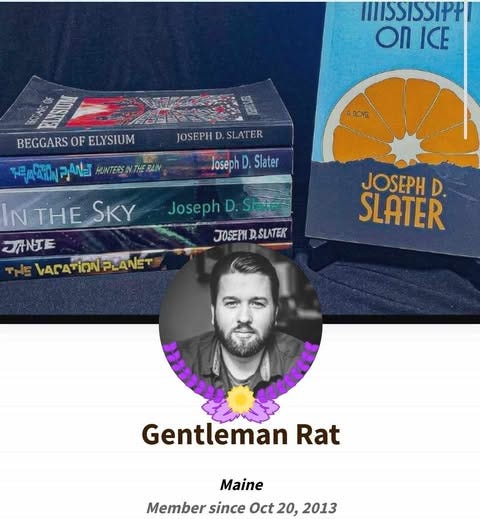
I’m sorry this post has been so long-winded, and this isn’t an attack on the system as it is, was, or whatever. This is simply my experience with NaNoWriMo, and I’m thankful for the positive memories it brought. I loved the sense of camaraderie found within the ranks of struggling writers, and the love I saw the community have for getting together and understanding each other’s struggles through a commonality.
I genuinely mean it when I say, “Rest in peace, NaNoWriMo. I tip my hat to you for all the confidence you gave budding writers over the years.”
A golden era of the writing community is closing its curtains, but that’s okay.
It taught us so much about ourselves along the way.
-Joe